Fall in Sonoma County doesn’t usually bring an abrupt change from hot weather to steady cold. You may still need cooling during warmer afternoons while cooler mornings and evenings gradually bring heating back into your routine. For a heat pump, that means the seasonal transition can involve switching between two different operating modes.
That makes fall a useful time for heat pump maintenance. Your system has already worked through summer cooling, and it may soon handle heating more often. A professional check can help identify developing problems, address performance concerns, and prepare the system for changing comfort demands.
Your Heat Pump May Not Get Much of an Off-Season
Unlike a traditional air conditioner that mainly works during warmer months, a heat pump can provide both heating and cooling. In Sonoma County’s mild climate, that can mean your system continues working through much of the year instead of sitting idle between seasons.
Fall can make that year-round workload especially noticeable. A warmer afternoon may call for cooling, while a cooler evening may have the same system operating in heating mode. The outdoor unit, indoor equipment, thermostat, and airflow system all need to work together as your comfort needs change.
That’s why fall heat pump maintenance isn’t about preparing for extreme winter weather. It’s about making sure a system that works across multiple seasons is ready to transition smoothly from summer cooling into more frequent heating.
Summer Cooling Can Affect Fall Heat Pump Performance
Your heat pump may have spent months cooling your home before fall arrives. During that time, filters can become dirty, outdoor equipment can collect debris, and small changes in airflow or system behavior may develop gradually.
You may not notice a problem if the system still reaches your thermostat setting. However, longer run times, weaker airflow, or rooms that became harder to cool during summer can provide useful clues about how well the system is operating.
Think back to how your home felt during the warmer months. Several observations are worth mentioning when you schedule heat pump maintenance:
- Rooms that were consistently harder to cool
- Cooling cycles that seemed longer than usual
- Changes in airflow from certain registers
- New or unfamiliar system noises
- More frequent thermostat adjustments
- Noticeable changes in energy use without a clear reason
You don’t need to determine what caused those changes yourself. Sharing what you observed gives your HVAC technician useful context when evaluating the system.
Fall Maintenance Helps Prepare the Heat Pump for Heating Mode
A heat pump that cooled your home successfully throughout summer still needs to operate properly when the thermostat begins calling for heat. The system changes how it operates to transfer heat into your home rather than removing heat from it.
Because heating and cooling use the same overall system differently, some performance problems may be easier to notice in one mode than the other. Fall gives you an opportunity to evaluate heating operation before you begin depending on it more regularly.
Cooling Performance Doesn’t Tell the Whole Story
A heat pump can appear to work normally during cooling season while still having an issue that becomes more noticeable during heating. That’s one reason simply knowing that the system “worked all summer” doesn’t tell you everything about its condition.
Professional heat pump maintenance can evaluate system operation, controls, airflow, and other factors that affect heating performance. Addressing those concerns during mild weather can be more convenient than discovering them after cooler temperatures have increased your heating needs.
Good Airflow Matters in Both Heating and Cooling Modes
Your heat pump depends on proper airflow no matter which mode it’s using. When airflow is restricted, conditioned air may not move through your home effectively, and certain rooms can become noticeably less comfortable than others.
A dirty filter is one possible cause, but blocked registers, return-air restrictions, ductwork conditions, and system setup can also affect airflow. If one part of your home regularly feels warmer or cooler than the rest, mention that during your maintenance appointment.
You can also compare current comfort with what you noticed during summer. A room that struggled with cooling and then feels difficult to heat may point to an airflow or distribution issue rather than a problem that only affects one operating mode.
There Are a Few Heat Pump Checks You Can Safely Handle
You don’t need to open the equipment or perform repairs to pay attention to your heat pump. A few basic homeowner checks can help you notice conditions that may affect performance and give you useful information to share with your technician.
Before your maintenance appointment, you can:
- Check the HVAC filter and replace it when needed according to manufacturer guidance.
- Make sure supply registers and return grilles aren’t blocked by furniture, rugs, curtains, or stored belongings.
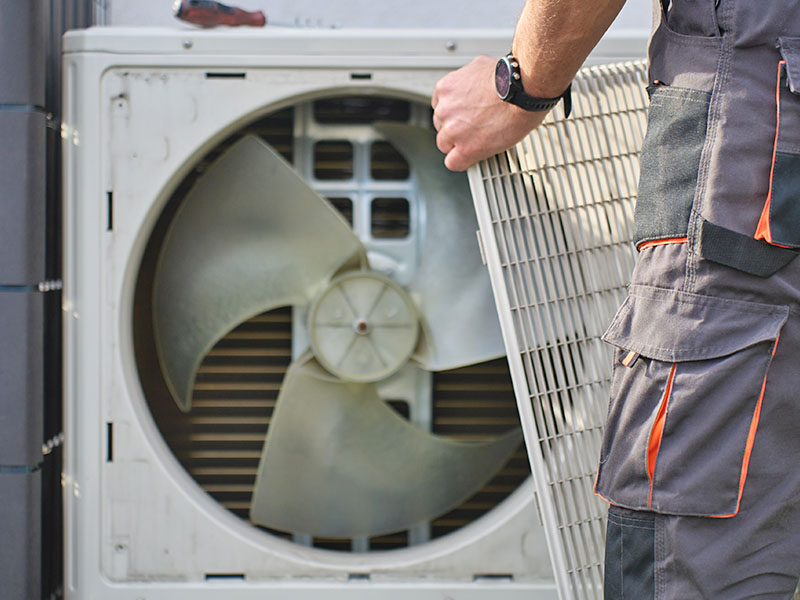
- Look around the accessible outdoor unit for loose leaves or visible debris.
- Notice whether airflow feels weaker in one area of the home.
- Pay attention to unfamiliar sounds or changes in how long the system runs.
- Confirm that the thermostat responds when you change the temperature or operating mode.
Keep these checks observational. Electrical components, refrigerant lines, coils, internal controls, and other technical parts of the heat pump should be evaluated by a qualified HVAC professional.
Your Thermostat Plays an Important Role During Fall
Shoulder-season weather can make thermostat settings more complicated because your comfort needs may change during the same day. You might want cooling after a warm afternoon and heating after temperatures drop overnight.
If you use a programmable or smart thermostat, review the schedule you relied on during summer. A cooling-focused schedule may no longer match when you’re home, when outdoor temperatures change, or how you want the heat pump to operate through fall.
Avoid Chasing Every Outdoor Temperature Change
You don’t need to make large thermostat adjustments every time the weather shifts. A practical schedule that matches your household routine can make the system easier to manage and help you notice when the heat pump isn’t responding the way you expect.
If the thermostat doesn’t switch modes correctly, displays a temperature that seems inaccurate, or doesn’t get the expected response from the heat pump, mention that during service. A comfort problem may involve the controls rather than the heat pump equipment itself.
Professional Heat Pump Maintenance Goes Beyond a Filter Change
Changing the filter and keeping the area around the outdoor unit clear are worthwhile homeowner tasks, but they don’t replace professional heat pump maintenance. Many important parts of the system aren’t visible or appropriate for homeowner troubleshooting.
A technician can evaluate equipment condition, operating performance, airflow, controls, and other factors that affect how the heat pump heats and cools your home. The maintenance process should be specific to heat pump equipment rather than treated as a generic HVAC checklist.
Our team at Mountain House Mechanical can also talk with you about anything you noticed during summer or as fall temperatures began changing. If a room has become less comfortable, the system sounds different, or operation has changed, those observations can help guide the evaluation.
The goal isn’t to assume something is wrong. It’s to understand how the heat pump is performing and identify any conditions that deserve attention before they interfere more noticeably with comfort.
Maintenance Can Support More Consistent Heat Pump Performance
A heat pump doesn’t have to stop working for its performance to change. Small issues involving airflow, controls, equipment condition, or system operation can affect how long it runs and how consistently your home reaches the thermostat setting.
Routine maintenance gives you an opportunity to address conditions that may interfere with normal operation. It can’t make older equipment perform like a brand-new system, and it can’t guarantee that you’ll never need a repair. It can, however, help keep the system operating as intended.
That matters with a heat pump because the same equipment serves your home across multiple seasons. A performance issue that starts during cooling can continue into heating if the underlying cause isn’t addressed.
Know Which Heat Pump Changes Are Worth Mentioning
Some performance changes are subtle enough that they’re easy to dismiss. You don’t need to assume every unfamiliar sound or longer cycle signals a major repair, but recurring changes are worth discussing with an HVAC professional.
Pay particular attention if you notice:
- Heating or cooling that has become noticeably uneven
- Airflow that feels weaker than it used to
- Frequent or unusual cycling
- New rattling, grinding, or other unfamiliar noises
- Difficulty reaching the thermostat setting
- A noticeable change in how long the system runs
- Normal cooling performance but noticeably weaker heating performance
These symptoms don’t tell you exactly what’s happening inside the system. That’s why it’s more useful to describe what you’ve noticed than to try to diagnose internal heat pump components yourself.
Fall Gives You Time to Address Problems Before They Become Urgent
One advantage of scheduling heat pump maintenance during Sonoma County’s mild fall weather is that you can address concerns during a lower-pressure part of the year. You aren’t waiting for harsh winter conditions, and you may not be dealing with the heavier cooling demand of summer.
If the system is operating normally, you gain a clearer picture of its condition before heating use increases. If maintenance uncovers a developing issue, you have an opportunity to discuss the next step without waiting for a complete loss of heating or cooling.
That doesn’t mean an older heat pump automatically needs a repair or replacement. Maintenance should help you understand what the equipment actually needs based on its current condition and performance.
Having that information gives you more control over the decision and makes it easier to plan instead of reacting to an unexpected problem.
Schedule Heat Pump Maintenance for Your Sonoma County Home
Sonoma County’s mild fall weather doesn’t necessarily give your heat pump a seasonal break. After handling summer cooling, the same system may begin switching between cooling and heating as temperatures change throughout the day.
Fall maintenance gives you a practical opportunity to check performance, address comfort concerns, and prepare your heat pump for its next stretch of regular use. If your system is due for maintenance or you’ve noticed changes in airflow, noise, run time, or comfort, contact Mountain House Mechanical to schedule heat pump maintenance and keep your system ready for the season ahead.